
Precision Over Proximity
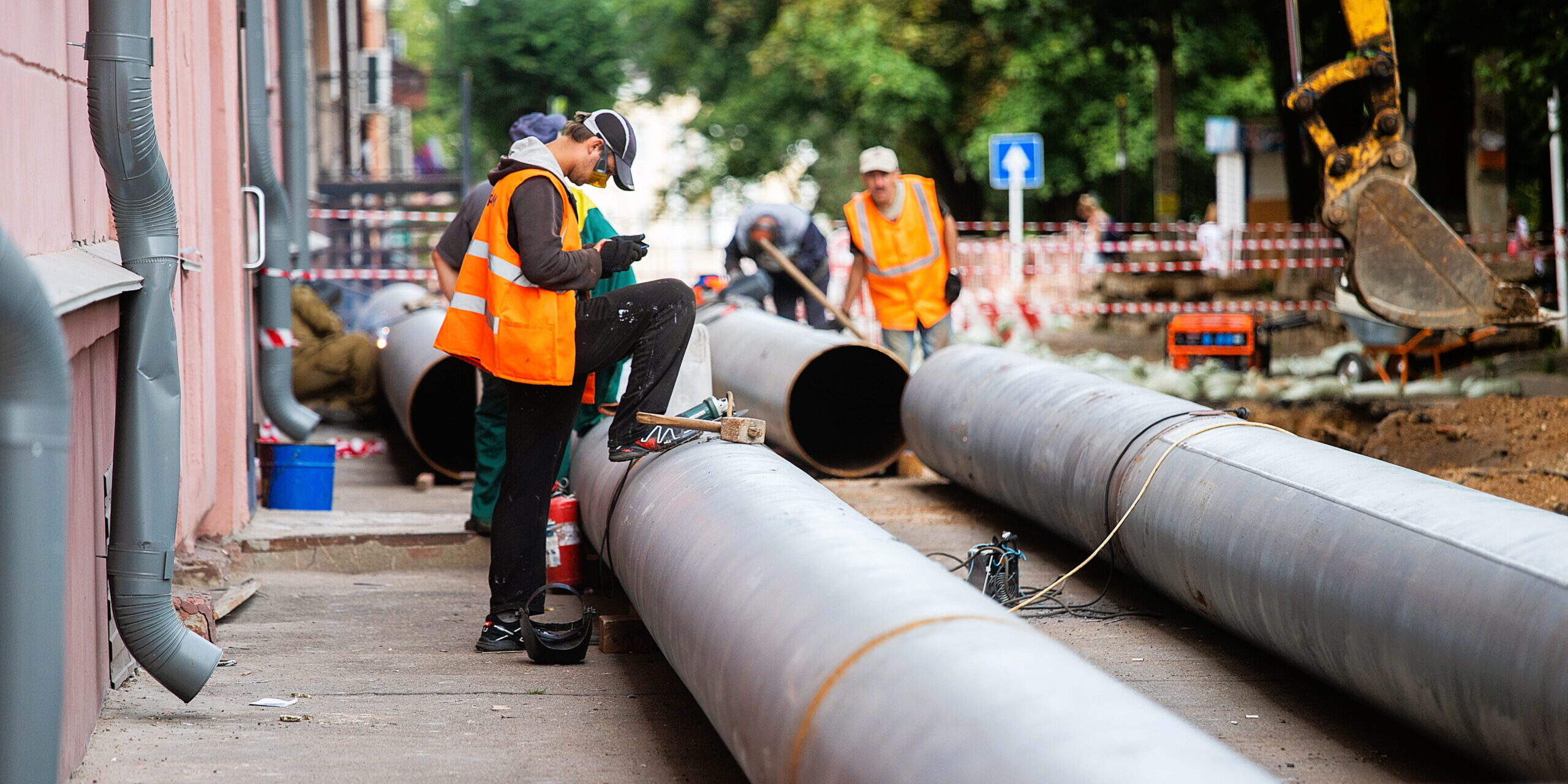
For decades, the water industry has relied on a “best guess” approach to asset management. When a trunk main reaches a certain age or suffers a high-profile burst, the traditional response is often a blanket replacement. It’s an understandable instinct – protecting the community from service disruptions is paramount.
However, this “rip and replace” philosophy is increasingly out of step with modern fiscal reality.
We are effectively digging up millions of dollars in remaining asset life simply because we lack the “eyes” to see inside the pipe. Before utilities commit to the staggering expense of replacing kilometers of reticulation or trunk mains, they must ask:
Are we solving a systemic failure, or are we just looking for a needle in a haystack?
The Age Fallacy
Age is a poor proxy for health. While a ledger might say a pipe is at the end of its 80-year design life, the reality underground is often quite different. Factors like soil chemistry, cathodic protection, and original manufacturing quality mean that a century-old pipe might be pristine, while a 20-year-old pipe in a corrosive environment is a ticking time bomb.
Replacing 1km of a critical trunk main is an astronomical capital investment. When utilities replace large sections based on age alone, they are almost certainly discarding segments with decades of service life remaining. Condition assessment flips the script, moving us from reactive replacement to precision intervention.
Finding the Needle: Non-Destructive, In-Service Insights
Modern condition assessment technology allows us to profile a pipeline’s internal health without ever breaking ground. These non-destructive, in-service methods are the “MRI of the water world.”
- In-Service Inspection: Systems operate within the pipe while it’s live. This is a game-changer for urban settings where shutting down a critical main causes unacceptable disruption.
- Targeted Intervention: Instead of replacing 10km of pipe, data often reveals that 95% of the line is structurally sound. The “problem” is actually a few localised areas of thinning or corrosion.
- Actionable Data: This isn’t just “info”; it’s a roadmap for targeted capital planning and risk prioritisation.
A utility was staring down a planned replacement of an entire 6.5km pipeline, with an estimated price tag between $35 million and $40 million. It was an enormous capital hit. However, rather than proceeding with the excavation, they opted for a comprehensive condition assessment.
The $35 Million Proof Point
The financial argument for condition assessment isn’t just theoretical; the ROI is often staggering – typically in the 10x to 20x range. Consider a landmark case study from Queensland in 2016. A utility was staring down a planned replacement of an entire 6.5km pipeline, with an estimated price tag between $35 million and $40 million. It was an enormous capital hit. However, rather than proceeding with the excavation, they opted for a comprehensive condition assessment.
The results were revelatory: the vast majority of the pipeline was in excellent health. By identifying the specific “needle in the haystack” areas that actually required attention, the utility was able to perform targeted interventions for just $300,000 to $400,000. The result?
The utility saved over $35 million in capital expenditure. Perhaps more importantly, that pipeline has operated without a single burst in the decade since. That $35 million wasn’t just “saved” – it was freed up to be distributed elsewhere in the network to address genuinely failing assets or to fund innovative leak-detection programs.
The Bottom Line
In an era of tightening budgets and increasing regulatory scrutiny, “expensive guessing games” are no longer viable. Pipeline condition assessment is the bridge between being a reactive utility and a smart asset manager.
By investing a fraction of the replacement cost into data, we stop digging up good pipe and start spending money where it actually matters. It’s time to stop treating our underground assets as “out of sight, out of mind” and start treating them as the data-rich resources they are.
To discuss our comprehensive suite of pipeline condition assessment technologies, please get in touch with one of our technical specialists here.