
For decades, the skilled field technician – armed with experience and a sounding stick – has been the backbone of water network integrity. Ground surveys have long provided the essential “truth” on the street. However, as networks age and water scarcity becomes a global pressure point, the challenge has outgrown any single method.
The future of leak detection isn’t about replacing the expert on the ground; it’s about empowering them. We are entering an era where traditional ground surveys are a critical pillar of a much more comprehensive, holistic approach – one that utilises a full gamut of innovative technologies to transform how we find, profile, and fix leaks.
Intelligence from Above: Directing the Ground Force
The most effective ground survey is the one that knows exactly where to look. This is where satellite technology like Origin Orbit has become a game-changer. By utilising a combination of Satellite-based Synthetic Aperture Radar (SAR), multispectral imaging, and proprietary AI, utilities can now “see” through the pavement.
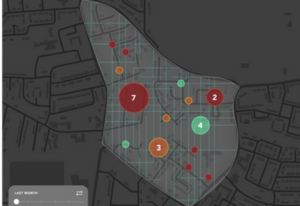
This technology identifies underground leaks by detecting specific spectral signatures and subtle ground changes – such as soil moisture shifts – without needing a single shovel in the ground. A recent project undertaken by Detection Services is currently delivering an 86% success rate. By using satellite data to narrow the search area, ground crews can bypass kilometres of “quiet” pipe and focus their expertise where it matters most.
The future of leak detection isn’t about replacing the expert on the ground; it’s about empowering them. We are entering an era where traditional ground surveys are a critical pillar of a much more comprehensive, holistic approach – one that utilises a full gamut of innovative technologies to transform how we find, profile, and fix leaks.
Proactive Health: Monitoring Stress and Condition
To truly manage a network, we must understand the “why” behind the leak. This begins with transient monitoring, which identifies high-pressure surges – the “heart palpitations” of a network – that cause premature pipe fatigue. By identifying these stress points, utilities can mitigate the causes of bursts before they happen.
Complementing this are non-invasive condition assessment technologies like p-CAT Nexus and p-CAT Sonic. These tools provide a clear picture of a pipe’s structural integrity without service disruption. Notably, p-CAT Sonic serves a dual purpose: it is an effective leak detection tool while simultaneously assessing pipe health. When integrated with high-resolution data loggers, these tools capture the vital “pulse” of the network, providing the data needed to move from reactive repairs to a sophisticated predictive maintenance model.
From Detection to Profiling: The AI Edge
Once localised, the tools at our disposal have evolved into sophisticated diagnostic devices. Modern acoustic sensors, such as Fido Tech, VonRoll Hydro and HWM, do more than just “hear” a leak; they profile it using AI.
By distinguishing between the mechanical “noise” of a city and a pipe failure, these tools eliminate guesswork. Furthermore, the introduction of multipoint correlation allows for the triangulation of exact locations with pinpoint accuracy. When combined with specialised tools like hydrophones for trunk mains, the ground survey becomes a high-precision surgical strike.
The “No-Dig” Revolution: Fixing without Friction
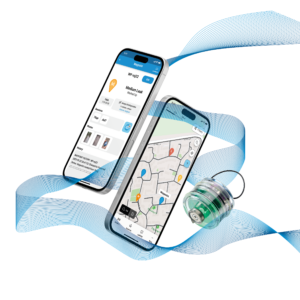
The holistic approach doesn’t stop once a leak is found. Traditionally, finding a leak was followed by the high cost and disruption of excavation. Today, solutions like Origin No-Dig are rewriting that script. By utilising a food-grade gel – a specialised calcium carbonate mixture – utilities can repair leaks internally with no excavation required. This “trenchless” philosophy ensures that the intelligence gathered by sensors results in a repair that is as innovative as the detection method itself.
The Strategic Brain: Turning Data into Foresight
The final piece of this puzzle is data management. Tools like Teamsolve help utilities capture leak data and identify overarching trends.
- Impact of Data Integration: Benefit to the Utility
- Thematic Mapping: Identifying if specific pipe materials or ages are prone to failure.
- Resource Optimisation: Deploying ground surveys to “high-risk” zones identified by AI trends.
- Proactive Management: Moving from “fix-on-fail” to a long-term network health strategy.
A New Standard of Performance
Leak detection has come a long way, but the “human element” of ground surveys remains as vital as ever. The shift we are seeing is the transition from a manual labor task to a technology-enabled strategy. By layering satellite intelligence, transient monitoring, AI profiling, and no-dig repair solutions over traditional ground expertise, utilities can dramatically improve performance and drastically reduce NRW.
To discuss our comprehensive suite of leak detection technologies, please get in touch with one of our technical specialists here.