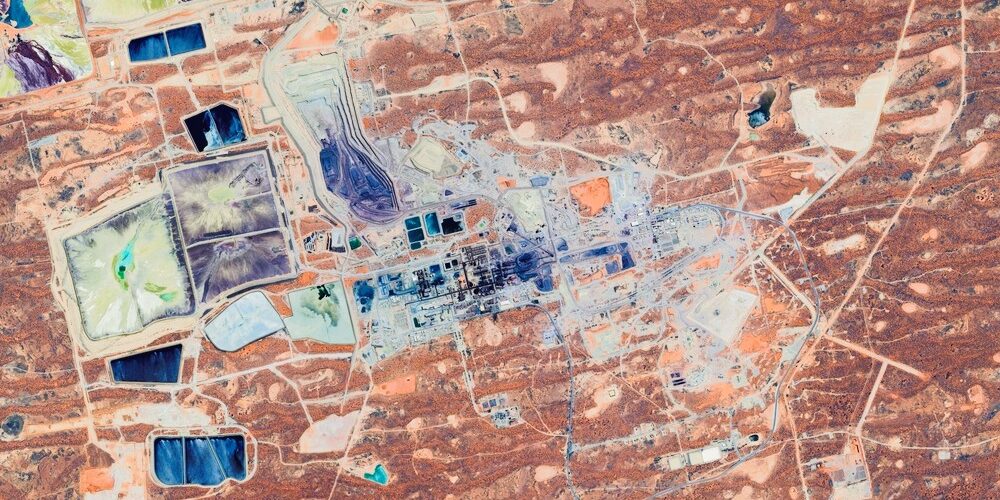
Every day, across mine sites throughout Australia and New Zealand, water is disappearing. Not through evaporation or process consumption – but through ageing pipelines, undetected joint failures, and unmetered losses that quietly accumulate into one of the industry’s most significant and least-acknowledged financial liabilities.
Water-related disruptions cost the global mining industry an estimated USD $20 billion annually in lost production, regulatory penalties, and community conflicts. Yet despite this exposure, the majority of mining operations across the region still lack a verified, quantified understanding of how much water they are actually losing – and where.
That gap is non-revenue water (NRW) – and it is costing mining companies far more than most leadership teams realise.
“NRW is not an environmental metric. It is a financial one — and on a large mine site, unmanaged water loss can represent hundreds of thousands of dollars in pumping costs, chemical treatment, and licence exposure every year.”
Understanding the True Cost of NRW
Non-revenue water refers to treated, pumped water that enters a distribution system but never reaches its intended endpoint – lost to leaks, illegal draw-off, or metering inaccuracy. In municipal water utilities, NRW benchmarking and loss reduction programmes are well-established regulatory practice. In mining, they remain the exception.
The real cost of NRW on a mine site is layered. There is the direct cost of water extraction and treatment that is never utilised. There is the energy cost of pumping losses through a leaking network. There is the infrastructure cost of pressure drops that stress assets and accelerate deterioration. And increasingly, there is the regulatory cost – as water licence conditions tighten across Australia and New Zealand, unaccounted-for losses expose operators to compliance risk that can threaten project approvals and community operating agreements.
The Benchmarking Problem – and the ILI Solution
One of the fundamental challenges with NRW management in mining is the absence of a consistent performance benchmark. Without a verified baseline, operations have no way to determine whether their loss levels are acceptable, improving, or deteriorating season-on-season.
The Infrastructure Leakage Index (ILI) – adapted from the international water utility standard – provides exactly this. By calculating the ratio of current annual real losses against the technically unavoidable annual real losses for a network of equivalent size, pressure, and pipe length, ILI benchmarking gives mining operators a defensible, comparable performance metric for the first time.
An ILI score of 1.0 represents the theoretical minimum loss for a given network. Most unaudited mine site water systems, in our experience, sit well above this – often significantly so. Closing that gap is not an environmental aspiration. It is a direct operational efficiency improvement.
From Acoustic Sensors to Satellite Imagery: Leak Detection at Scale
Identifying NRW requires more than a water balance spreadsheet. It requires physical detection – and on a mine site covering hundreds or thousands of hectares, that detection must be both technically rigorous and operationally practical.
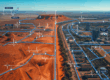
Modern leak detection programmes combine multiple complementary technologies. Swarm acoustic sensor deployments allow coordinated, simultaneous monitoring across large pipe networks – correlating sound patterns to pinpoint leak locations with high confidence, even on noisy pressurised systems. Satellite moisture anomaly overlays extend coverage to remote or inaccessible sections of a network, flagging ground saturation patterns consistent with subsurface leakage. Together, these tools convert an invisible, distributed problem into a mapped, prioritised maintenance programme.
Critically, this approach produces verifiable data – not estimates. In an environment where water licence compliance increasingly requires auditable reporting, the ability to demonstrate a systematic, technology-verified loss assessment programme is fast becoming a governance expectation.
Making the Business Case: NRW as a Financial Priority
Water infrastructure managers in mining face a familiar challenge: competing for capital against production-critical assets. The NRW case needs to be framed accordingly – not as an environmental cost centre, but as a return-generating investment.
A comprehensive water balance audit, ILI benchmarking exercise, and targeted leak detection campaign typically delivers a clear, quantified loss picture within weeks. The resulting maintenance prioritisation – addressing the highest-volume losses first – routinely achieves measurable reductions in pumping costs, chemical consumption, and regulatory exposure within the same financial year.
In an operating environment where every efficiency gain counts, non-revenue water is not a minor technical issue. It is a P&L line item waiting to be recovered.
Get in touch with one our technical team to discuss our resources sector solutions.