In the water industry, the underground network is often a realm of the unknown. For decades, utilities worldwide have relied on age-based models to determine when to replace critical infrastructure. The logic was simple: if a pipe is old, it must be deteriorating.
However, this approach is both capital-inefficient and risky. It often leads to the premature disposal of assets that still have decades of useful life, or conversely, misses newer assets that are failing rapidly due to environmental factors.
A leading Victorian utility, in partnership with Detection Services, has moved beyond this “fear of the unknown.” Through a long-term Large Main Condition Assessment (LMCA) contract, the utility is shifting the paradigm from reactive management – chasing bursts – to a proactive, data-driven strategy.
By arming themselves with accurate condition data, they are making informed decisions that save significant resources while securing water reliability for nearly a million households.
The Versatility of the Technology Suite
The cornerstone of the 2024/2025 program success was the versatility of the technology deployed. Detection Services utilised a “toolbox” approach, understanding that no single method fits every scenario. The program covered a diverse range of materials – including MSCL, DICL, CICL, and AC – with pipe diameters ranging from DN300 to DN900.
The primary strategy involved a two-tiered assessment process using p-CAT Nexus or Infinity, and p-CAT MFL (Magnetic Flux Leakage).
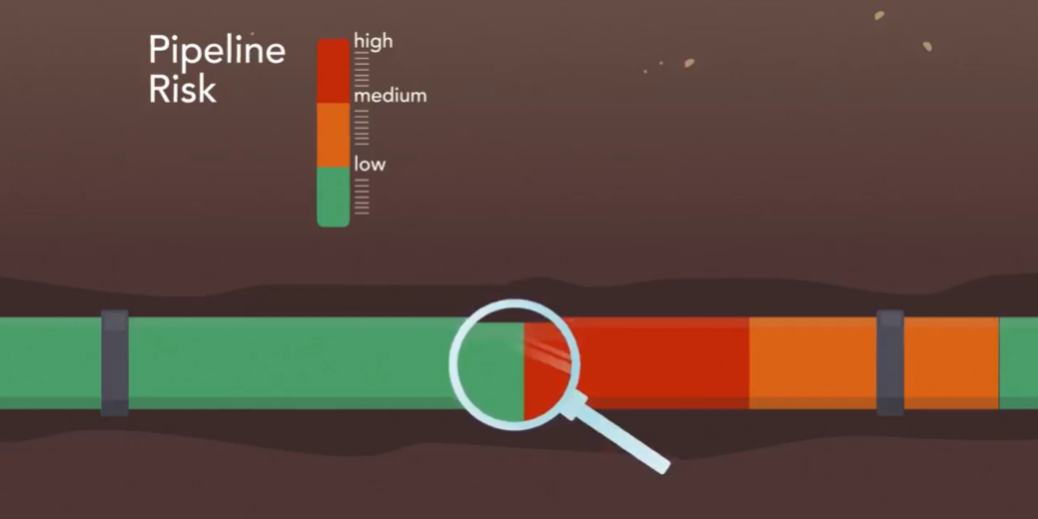
p-CAT Nexus acts as the long-range reconnaissance tool. It is non-invasive and capable of screening vast distances – up to 6km in individual sections. In the 2024/2025 financial year, the team tested 89.7km of critical water mains using this screening technology. This creates a “triage” system, allowing the utility to identify which parts of the network are healthy and which require a closer look.
This ability to filter the network is financially powerful. It allows the utility to understand what parts of the network do not require further investigation, enabling them to focus their attention and budget solely on critical areas.
The Power of Validation
Data is only valuable if it is trusted. A highlight of this year’s program was the robust validation process designed to prove the accuracy of the long-range screening.
Following the p-CAT Nexus screenings, Detection Services deployed p-CAT MFL – a high-resolution technology used to measure remaining wall thickness with pinpoint accuracy – on 10 specific pipelines. Seven of these pipes had previously been assessed using Nexus/Infinity. The results were compelling: the MFL findings validated the Nexus data, providing a high correlation regarding remaining wall thickness.
This validation process provided the utility with the “proof of concept” required to make high-stakes investment decisions. It demonstrated that the non-invasive screening tools were providing accurate, actionable data regarding the asset’s remaining life.
This ability to filter the network is financially powerful. It allows the utility to understand what parts of the network do not require further investigation, enabling them to focus their attention and budget solely on critical areas.
Driving Decisions with Data
The insights generated from the 89.7km of testing have been transformative for the utility’s asset renewal strategy. The data revealed a stark reality hidden beneath the surface:
- 35.92% of the assessed network fell into the “Poor” or “Very Poor” categories (Condition Score 1 or 2), with remaining wall thickness below 70%.
- Conversely, a significant portion of the network was found to be in fair or good condition, despite its age.
Without this data, the utility might have replaced the healthy pipes based solely on their installation date – a waste of millions in capital expenditure. Alternatively, they might have ignored the 35% of poor-condition pipes, leading to inevitable bursts, service interruptions, and emergency repair costs.
Instead, the utility now possesses a granular view of 89.7km of critical infrastructure. They can surgically target the 23km of compromised pipeline for maintenance or replacement while deferring capital spend on the healthy sections.
A Partnership Built on Safety and Innovation
The success of the LMCA program extends beyond the data. It is underpinned by a collaborative partnership focused on safety and innovation. The 2024/2025 program was delivered with a Lost Time Injury Frequency Rate (LTIFR) of zero, supported by rigorous safety auditing and joint initiatives between Detection Services and the utility.
By moving away from age-based assumptions and embracing a sophisticated, multi-technology assessment pipeline, the utility is not just managing infrastructure; they are mastering it.
They have successfully eliminated the fear of the unknown, replacing it with a strategic roadmap that ensures financial efficiency and operational resilience for decades to come.