
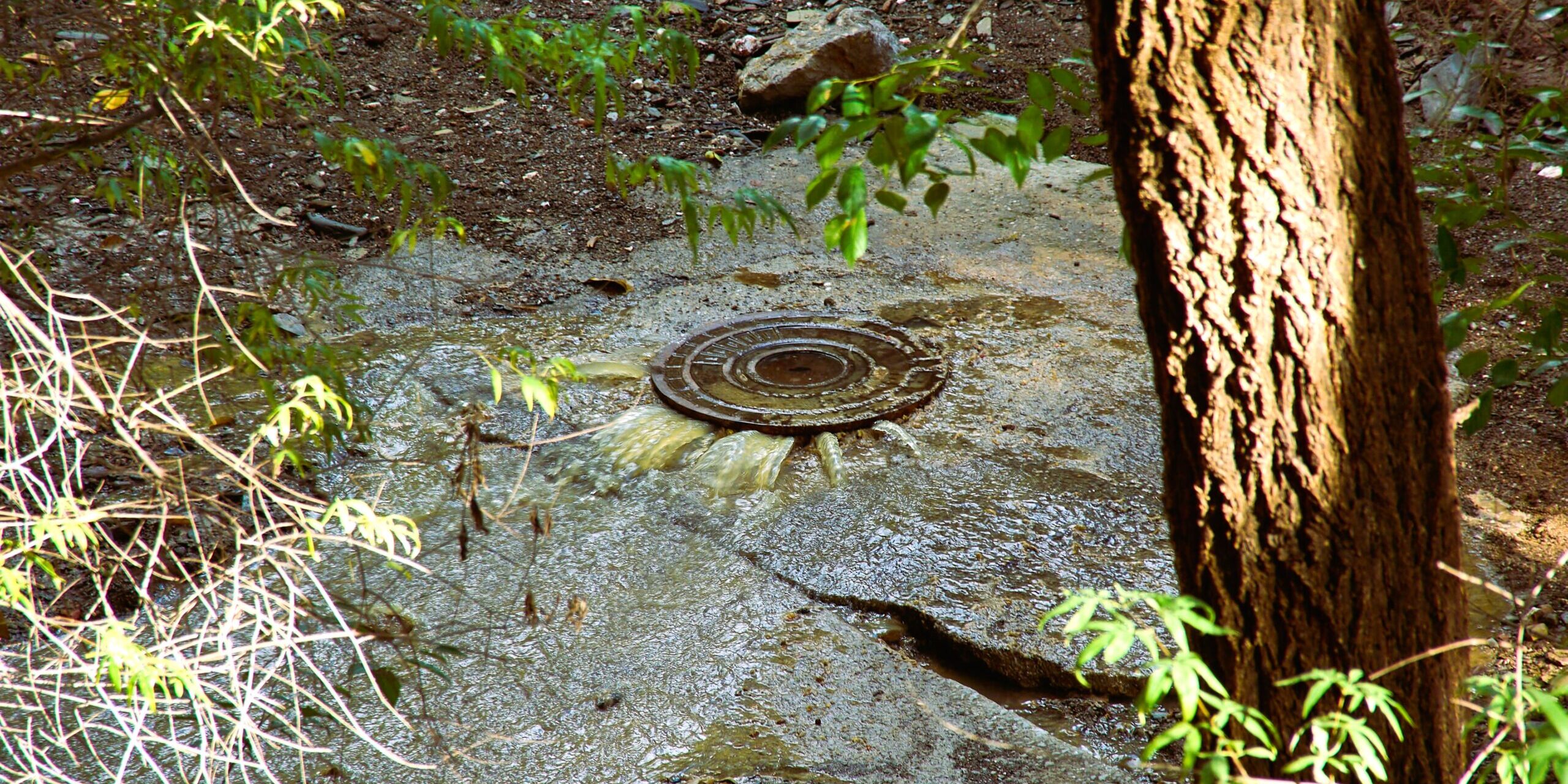
Infiltration and Inflow (I&I) – the unwanted entry of groundwater and stormwater into sewer networks – remains one of the most persistent and costly headaches for councils and utility providers. The symptoms are glaring: sanitary sewer overflows (SSOs), skyrocketing treatment and pumping costs, limited network capacity, and the risk of regulatory breaches.
But the fundamental challenge has always been: Where do you even begin to find the source?
For decades, the standard approach to source detection has been comprehensive network-wide surveys, often relying on resource-heavy methods like smoke testing and CCTV inspections. These methods are essential for finding specific defects, but when deployed across an entire network, they are akin to searching for a needle in a vast haystack – a time-consuming, expensive, and often inefficient process.
The New Paradigm: Precision Over Volume
The p-CAT™ I&I service offers a revolutionary, data-driven alternative, shifting the focus from inspecting every pipe to strategically identifying the problem areas. This is achieved through its innovative Mini-Catchment Strategy.
The Mini-Catchment Strategy in Action
Instead of treating the entire network as a single project, p-CAT I&I divides it into smaller, manageable sub-catchments. The process is elegant and highly effective:
- Divide and Monitor: Temporary, non-invasive sensors are installed to monitor flow in these mini-catchments during both dry and wet weather.
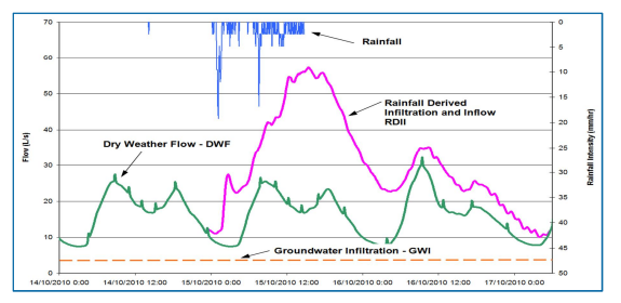
- Data Acquisition: These sensors collect granular data, identifying trends in wet weather inflow (WWI) and groundwater infiltration (GWI) with minimal disruption to the network and customers.
- Advanced Analysis: This is where the science truly comes alive. The raw sensor data, combined with critical operational information – such as pump station run times and SCADA data analysis – is synthesised. This rigorous analytical layer determines the precise correlation of rainfall-dependent I&I (RDII), GWI, and surface water inflow (SWI).
This process allows the utility to immediately eliminate low-value areas – the 80% of the network that is not contributing significantly to the problem. It instantly pinpoints the 20% of the network causing 80% of the issues, a concept central to achieving a high Return on Investment (ROI).
Supercharge Your Existing Programs
This targeted approach supercharges traditional source detection programs like smoke testing and CCTV.
Smoke Testing and CCTV: When deployed indiscriminately across a network, these methods are often used to simply find inflow defects and can miss the most critical infiltration points.
The p-CAT Advantage: By executing the p-CAT I&I investigation first, the utility gains a clear, quantified roadmap. Instead of committing teams and resources to inspect kilometres of healthy pipe, they can focus their smoke testing and CCTV crews exclusively on the highest-priority mini-catchments identified by the p-CAT data. This means every CCTV crew-day is spent in an area guaranteed to contain a major I&I source.
This process allows the utility to immediately eliminate low-value areas – the 80% of the network that is not contributing significantly to the problem. It instantly pinpoints the 20% of the network causing 80% of the issues, a concept central to achieving a high Return on Investment (ROI).
This dramatic shift saves massive amounts of time, money, and labour. For example, a project for a regional Australian council using this strategy identified savings of over $168,000 in a single standard catchment, compared to a traditional full-network approach. Similarly, one project for a forward thinking utility delivered significant savings in source detection works, leading to over $7million in avoided rehabilitation costs.
The Quadruple-Win Outcome
Implementing the p-CAT I&I mini-catchment strategy before undertaking physical inspection programs delivers a quadruple-win:
- Massive Cost and Time Savings: Resources are reallocated from low-value, network-wide searching to high-value, targeted defect detection.
- Reduced Customer Complaints: Non-invasive monitoring and the reduction in overall field labour significantly minimise disruptive activities like widespread smoke testing and network access.
- Quantifiable Results and Prioritisation: The utility moves beyond simply finding defects to quantifying the severity of the I&I, allowing them to precisely prioritise repairs based on the highest-return investment.
- Sustainable Asset Management: By reducing I&I, the utility immediately lowers long-term treatment and pumping costs, avoids compliance penalties, and creates critical capacity in its network to support future development.
The difficulty in I&I management is no longer a philosophical problem of where to start. The p-CAT I&I service provides a clear, data-driven roadmap, allowing councils and utilities to stop guessing, stop wasting resources, and start solving their known problems quickly and accurately. It’s about working smarter, not harder, and ensuring every dollar spent on source detection delivers maximum value.
Cost Savings Summary: p-CAT I&I Mini-Catchment Strategy
The p-CAT I&I mini-catchment strategy delivers substantial, measurable cost savings by dramatically increasing the efficiency of subsequent investigation and rehabilitation programs. By focusing resources only on the highest-value areas, utilities and councils avoid the cost, time, and labour associated with inspecting healthy sections of the network.
The Value
The savings stem from the core principle of working smarter, not harder: identifying the 20% of the network causing 80% of the issues.
- Avoided Labour & Time: Less time is spent by field crews (smoke testing, CCTV) in areas that yield low or no results.
- Targeted Investment: Rehabilitation funds are spent only on pipes and sections where the p-CAT analysis confirms a high volume of I&I, ensuring the highest possible return on investment.
- Reduced Operational Costs: Long-term savings result from less I&I reaching the treatment plant, lowering pumping and chemical/treatment expenses.
These examples demonstrate that the initial investment in the p-CAT I&I investigation is quickly recouped by the substantial savings realised in the subsequent, more efficient, and focused operational programs. Get in touch with us today to chat with one of our technical experts.